

Open Projects in Innovation
Explore research and CSR opportunities at
IIT Madras in this domain.
Innovation
16 proposals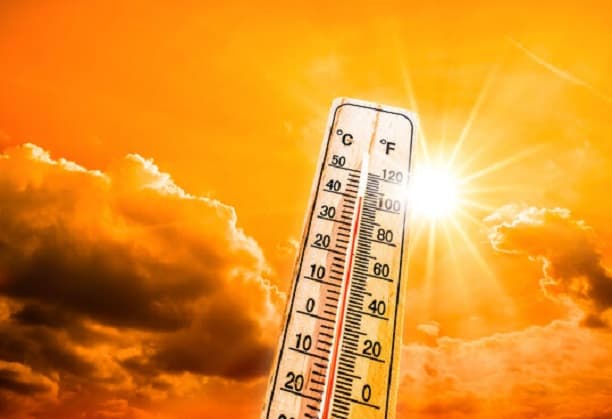
Early warning for heatwaves over India
This IIT Madras project aims to understand the spatiotemporal dynamics of heatwaves over India and develop reliable precursors for early warning. By constructing climate networks from satellite data, applying complex network analysis, and studying compound events associated with heatwaves, the research will help identify teleconnection patterns and provide actionable insights for governments to design strategies that protect vulnerable populations from extreme heat events.
By: Prof. Sujith
Cause: Innovation

Concept Note on AMPERE - Autonomous Manufacturing Platform for energy research and engineering
This project proposes India's first autonomous precision materials upscaling and manufacturing lab for electrolyzers and batteries, combining AI with advanced experimental and process engineering protocols. By building a modular, closed-loop platform where a central AI agent manages data, experiment planning, fabrication, assembly, and testing, the initiative aims to accelerate materials discovery, create a generative AI-based evaluation framework, and deliver economically viable, next-generation energy conversion and storage devices.
By: Prof. Abhinav Raman
Cause: Innovation

Ultra-Low-Power Neuromorphic Edge Accelerators for Surgical Workflow Intelligence and Rehabilitation Systems
This project develops energy-efficient neuromorphic edge accelerators that support real-time surgical workflow analysis and intelligent rehabilitation systems. The technology aims to enhance healthcare outcomes through faster, smarter, and low-power AI-driven solutions.
By: Prof. Srinivasa Chakravarthy
Co-PI: Prof. Aniruddhan
Cause: Innovation

Developing a traffic monitoring tool to help traffic police identify regions of potential traffic jams and conflicts for early intervention
This project is creating an AI-driven traffic monitoring tool that enables traffic police to detect congestion-prone areas and traffic conflict zones in real time, supporting faster interventions, smoother traffic flow, and enhanced road safety.
By: Prof. Lelitha Devi
Cause: Innovation

AI - Powered Customer Engagement & Conversational Intelligence for Industrial Marketing
Industrial marketing is becoming increasingly data-driven, requiring more personalized and intelligent customer interactions. This project leverages AI-powered conversational intelligence to enhance customer engagement, streamline communication, and enable smarter, insight-driven marketing strategies.
By: Prof. Nargis Pervin

Human-AI Insights Center
The Human-AI Insights Center at IIT Madras will investigate how people perceive, engage with, and form relationships with AI agents, platforms, and systems, focusing on social, psychological, and ethical implications. Through research, education, policy recommendations, and community outreach, the center aims to promote human-centered AI designs, inform regulators and industry on best practices, enhance user trust and literacy, and ensure AI technologies complement and protect human capabilities and interests.
By: Prof. Richa Agarwal
Cause: Innovation

Artificial Intelligence for Retail
This project develops an AI-powered platform for retailers that combines a multilingual recommender system, customer loyalty engine, and data-driven inventory management app using historical sales and preference data. By providing personalized product recommendations, stock alerts, and collaborative tools like the Dealshare app for sourcing surplus inventory at lower cost, the initiative aims to strengthen small retailers' competitiveness, improve customer retention, and enable inclusive digital transformation across India's retail ecosystem.
By: Prof. Vaibhav Chawla
Cause: Innovation

A rubric to evaluate carbon footprint-as a tool for what-if evaluations as an individual or as a med scale enterprise
This project from the Industrial Energy Assessment Cell at IIT Madras aims to create a robust framework, grounded in measurement and verification protocols, to estimate and minimise industrial carbon footprints from cradle to grave. By extending existing energy audit tools to capture process-specific emissions, testing low-carbon scenarios, and developing an intuitive carbon-star rating system, the rubric will guide firms toward balanced, science-based decarbonisation strategies that enhance financial, social, and environmental sustainability.
By: Prof. Satyanarayanan Seshadri
Cause: Innovation

A novel probabilistic approach to epidemic modelling
This project develops a novel probabilistic methodology to model the instantaneous, complex network of social interactions underlying epidemic spread, going beyond conventional agent-based models. By designing massively parallelisable, GPU-amenable algorithms that reduce CPU-GPU communication overheads, the research will enable faster, cheaper simulations of epidemic dynamics and validate them using real-world contact tracing networks and existing models, providing powerful tools for regulators to plan mitigation strategies during future outbreaks.
By: Prof. Sayan Gupta
Cause: Innovation

Automated obstacles for easing motion of a panicked crowd
This project designs an AI engine capable of reading crowd movement through image processing and simulating collective dynamics in confined spaces to anticipate panic-induced congestion. Trained on thousands of test scenarios, the system will recommend real-time placement of movable obstacles to avoid chokepoints at exits and corridors, enabling authorities to manage evacuations during disasters and crowded events while significantly reducing the risk of stampedes and loss of life or property.
By: Prof. Pallab Sinha Mahapatra
Cause: Innovation

Bio-Inspired Information Archiving Mechanism
This pilot project explores a bio-inspired approach to high-volume information storage by encoding written documents as genomic transcripts within bacteria, leveraging the exceptional longevity and resilience of genomes. Using molecular technologies to isolate genomic imprints and encryption through data analysis, the team aims to demonstrate secure, retrievable, and patentable genomic archiving methods that can meet the growing need for long-term, large-scale data storage across government and private organisations.
By: Prof. Rama S. Verma
Cause: Innovation

Computational Aspects of Classical Music
This project investigates Carnatic music through a computational lens, using tools such as composition segmentation, raga recognition, concert segmentation, and stroke recognition to classify and transcribe musical features. By also developing a low-cost EEG system to capture how different ragas affect brain activity and converting these signatures into speech via vernacular text-to-speech systems, the initiative will enhance digital archives, navigation of large online repositories, and therapeutic or assistive applications for people with speech difficulties.
By: Prof. Hema A Murthy
Co-PI: Prof. Kamakoti V
Cause: Innovation

Plant species and sub-species identification with the help of computer vision
This project develops computer vision models that analyse field images and agronomic parameters to identify crop species and subspecies, detect weed density, and assess plant health and stress in real time. Enhanced with deep learning, the resulting application will help farmers link crop growth with climatic and soil conditions, choose appropriate interventions, and gradually transition from chemical-intensive practices to precision agriculture based predominantly on organic or natural inputs.
By: Prof. G. Veeraraghavan
Cause: Innovation

Noise reduction of air-conditioning systems
This project aims to understand how air-conditioning system components generate noise and to design modifications that significantly reduce unacceptable increases in sound levels. By commissioning an anechoic chamber to test variable speed fans and compressors and proposing design changes that target reductions of at least 6 dB for fans and 5 dB for compressors, the initiative will support more comfortable indoor environments while improving the energy efficiency and sustainability of cooling in India.
By: Prof. P. Chandramouli
Cause: Innovation

AI-assisted crowd management during large festive events
This project undertakes an in-depth study of public gatherings at large festive and pilgrimage events, developing AI-driven simulation models of crowd dynamics that are validated with real-world data. By integrating systematic crowd control strategies with real-time data collection, prediction, and on-ground action, the platform will help organisers ensure attendee safety, improve crisis management, optimise infrastructure and resource placement, and ultimately support socially accepted, tourism-friendly event planning.
By: Prof. Pallab Singh Mahapatra
Cause: Innovation
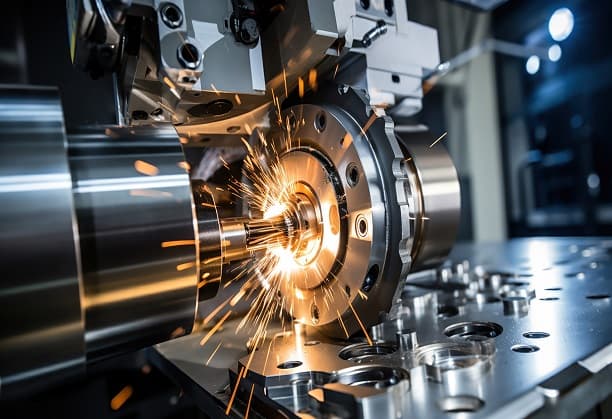
Selective Laser Melting and Topology Optimization of Aero-Engine Parts for Better Heat Dissipation, Vibration Control, and Lightweight
This project focuses on designing and topology-optimising cellular aero-engine structures, followed by selective laser melting fabrication using Ti6Al4V and Inconel 718 as base materials. Through detailed microstructural, thermal, and mechanical analysis, including finite element modelling and post-process heat treatment, the team aims to create high surface-area components that simultaneously deliver superior heat dissipation, vibration absorption, and weight reduction, thereby advancing aero-engine performance and additive manufacturing capabilities in India.
By: Prof. Somashekhar S. Hiremath
Cause: Innovation