

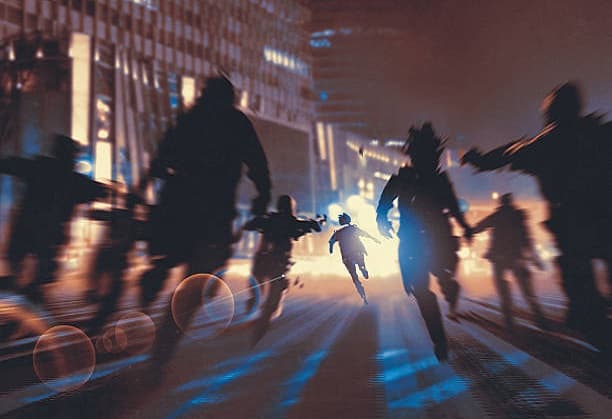
Automated obstacles for easing motion of a panicked crowd
Principal Investigator
Prof. Pallab Sinha Mahapatra
Objective
- The primary objective is to build an AI which has been trained to selectively place obstacles in the path of a panicked crowd so as to avoid bottlenecks, and smoothen the crowd flow at exit. The proposed AI engine will be able to obtain real-time information on the movement of individuals with image processing. Based on this information, it will be able to suggest the positions for placing movable obstacles to ease the pedestrian traffic.
Description
- Build a code using artificial intelligence which can read the crowd movements and suggest appropriate measures in circumstances of panic, such that it can be extrapolated to other systems as well., Involve the simulation of collective dynamics to map crowd movement in a confined space. The code also allows for placement of immovable and movable obstacles in the form of walls., Implement external stimulus for fear and panic and run multiple cases by modifying the environmental parameters., Feed this resulting data into an AI engine, Final integration and testing with crowd data
Impact
- The proposed technology will implement real-time solutions for crowd control in case of natural disasters and dangerous situations in densely packed places. It uses cameras set up to take images of the crowd and detect the occurrence of an adverse event. In such situations, the AI (which has already been trained with thousands of possible test cases) would recommend certain patterns in which some movable obstacles can be placed to optimally avoid the probable chokepoints in the crowd flow. If these automated obstacles are successfully implemented, it would be possible to thwart stampede-like situations, induced by the congestion of the exits/corridors, and avoid the loss of life and property.