

Open Projects in Miscellaneous
Explore research and CSR opportunities at
IIT Madras in this domain.
Miscellaneous
8 proposals
Turing patterns of misinformation: A novel early warning system for fake news
This study applies multi-scale mathematical modelling, simulations, analytical techniques, and machine learning to understand how Turing instabilities drive the spread of misinformation on social media. By calibrating models on real-time metadata, the project will produce a software prototype that classifies a news item's viral potential based on its dynamical signatures, assigns a risk score, and recommends targeted countermeasures, with scope for patenting and commercial deployment for platforms and regulators.
By: Prof. Sayan Gupta
Cause: Social

Time commitment in work context
This research examines how employees' subjective experiences of time, beyond clock-based schedules, influence their commitment to tasks and responsiveness to externally imposed deadlines. By analysing how individuals bring personal temporal orientations into workplaces that typically assume uniform time experience, the study will help organizations become more temporally intelligent, balancing diverse time perceptions with operational needs to reduce strain from always-on expectations and create healthier, more sustainable work environments.
By: Prof. Lata Dyaram
Cause: Social

Quantum Electronics from 2D layered Materials
This project explores atomically thin quantum materials to build next-generation low-energy optoelectronic devices, with a particular focus on quantum light-emitting devices fabricated from high-quality 2D heterostructures. By establishing local growth protocols for materials such as hexagonal boron nitride and transition metal dichalcogenides, integrating them into vertical QLED heterostructures, and transferring these stacks onto flexible substrates, the initiative aims to pioneer ultraefficient, flexible quantum optoelectronics for future displays and photonic technologies.
By: Prof. Abhishek Misra
Cause: Miscallenous

Developing a Vocal Work Culture among Women in the Workforce
This study investigates how gender and socio-economic contexts influence women's ability to speak up in Indian workplaces, identifying barriers to being heard and the consequences for stakeholders. Using mixed methods that include metropolitan colloquiums, focus groups, and large-scale surveys, the research will generate a conceptual model and practical strategies that organisations can use to encourage women's voices, supporting talent retention, leadership pathways, and broader gender equality goals.
By: Prof. Lata Dyaram
Cause: Women Empowerment
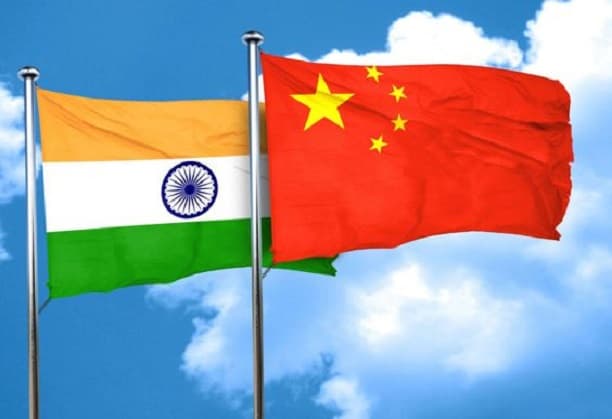
Reimagining Chindia: cultural-diplomatic contacts between South India and China
This study develops an alternate narrative of India—China ties by consolidating case studies from Kerala, Tamil Nadu, and Maharashtra that reveal deep historical exchanges in culture, diplomacy, and commerce. By examining episodes such as China's role in Cochin—Calicut disputes, the transformation of Kerala's pepper trade, and lesser-known labour links in the Nilgiris, the project seeks to reshape public imaginations of “Chindia†and ease contemporary relations beyond boundary disputes.
By: Prof. Joe Thomas Karackattu
Cause: Social

Women and their Well- Being at Subsistence Marketplaces: An Approach towards Understanding their Personal and Professional Role
This study examines women's participation in informal, subsistence economies in developing contexts, focusing on motivations beyond pure economics and how these roles shape personal and professional identities. By identifying non-economic drivers, household dynamics, and socio-cultural factors affecting well-being, the research will generate insights that help NGOs and companies design CSR activities and support programmes that truly benefit women working in subsistence marketplaces.
By: Prof. Varisha Rehman
Cause: Women Empowerment
Neuro Diversity in the Workplace
This project reframes conditions like autism, dyslexia, and ADHD as natural variations in thinking, investigating how current hiring and HR practices help or hinder neurodivergent talent. By analysing organisational approaches and collaborations with external partners, the research will produce a practical HR framework and policy recommendations that enable inclusive recruitment, training, and support for neurodiverse employees while raising awareness of the value of cognitive diversity.
By: Prof. Lata Dyaram
Cause: Social

To buy or not to buy insurance against floods?: An analysis of the decision drivers in urban populations
This research examines why urban populations in flood-prone Chennai choose to purchase or forgo flood insurance, despite escalating climate risks. By engaging industry stakeholders, reviewing literature, and surveying around 1,000 residents with robust statistical models, the study will identify key drivers and barriers to insurance adoption, offering evidence to shape climate adaptation policies, raise awareness, and protect vulnerable communities from extreme weather events.
By: Prof. Krishna Malakar
Cause: Infrastructure