
Ensuring Safe, Sustainable and Technology-Driven Access to Clean Drinking Water
A collaborative initiative to build water-secure communities through indigenous innovation
The Challenge
Access to safe drinking water remains a pressing public health challenge across many regions of India. Over 10% of habitations are affected by poor water quality, with groundwater contamination by uranium posing a serious risk in states such as Punjab, Rajasthan, Haryana, and Gujarat. Long-term exposure to uranium-contaminated water can lead to severe health complications, particularly kidney damage, making reliable access to clean drinking water an urgent priority.
Vision
This initiative aims to create water-smart villages where every household has access to safe drinking water through sustainable, technology-enabled infrastructure. By combining indigenous innovation, digital monitoring, and community participation, the project seeks to establish a scalable model that can be replicated across water-stressed regions of India, improving public health while strengthening climate resilience and sustainable rural development.
The Initiative
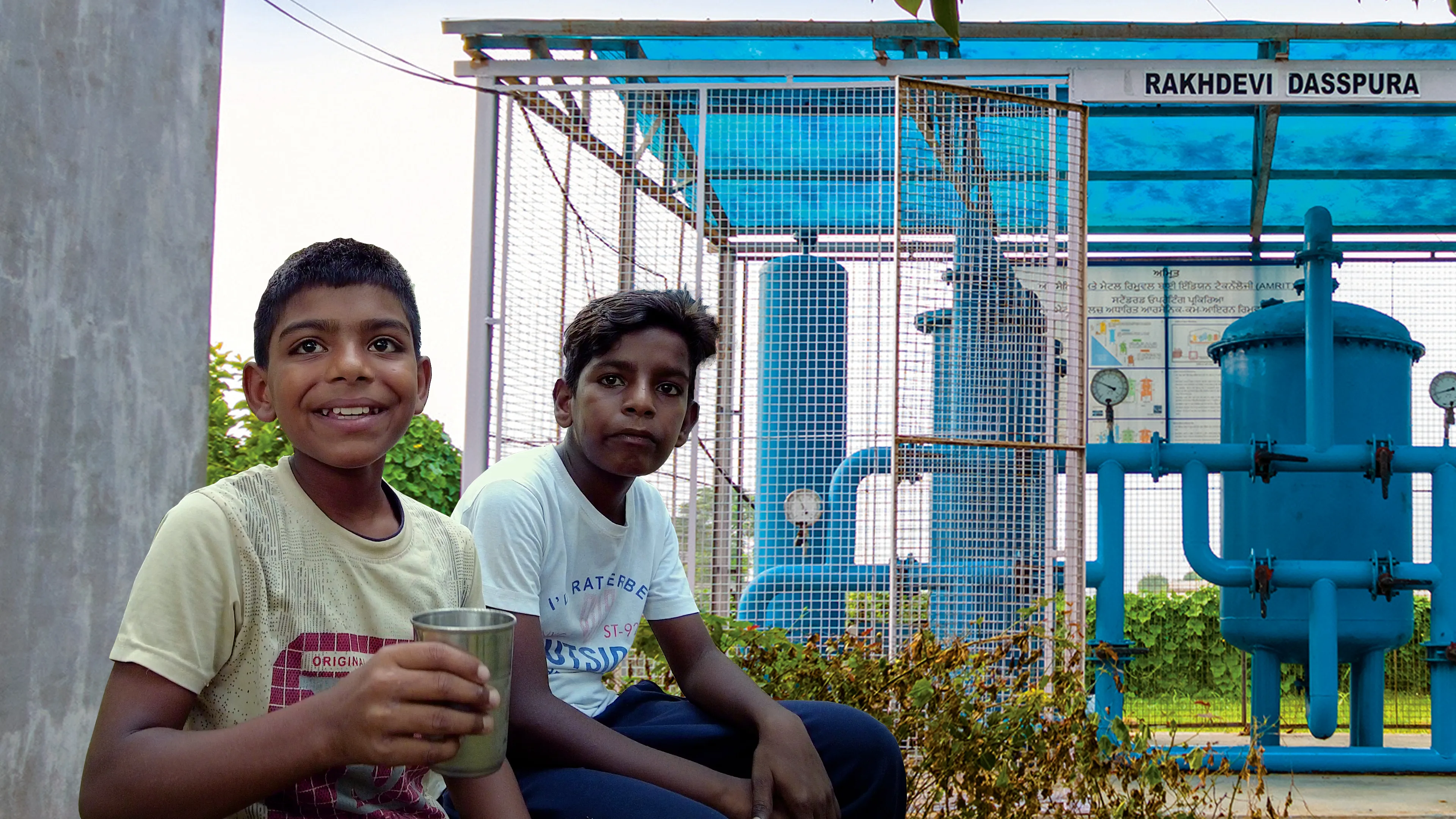
To address this challenge, IIT Madras is implementing Smart Drinking Water Treatment Plants in uranium-affected villages using AMRIT (Anion & Metal Removal by Indian Technology)—an indigenous technology developed and incubated at IIT Madras for the efficient removal of uranium and other harmful contaminants from drinking water. The initiative combines advanced water purification with IoT-enabled monitoring, digital dashboards, and community engagement to create a sustainable model for safe rural water supply.
Technology for Sustainable Water Security
The project goes beyond installing treatment systems. Each plant is integrated with smart IoT technology that enables real-time monitoring of water quality, plant performance, and water distribution. Mobile applications and online dashboards provide transparency in system operation and usage, while baseline surveys and community awareness programmes ensure that local communities adopt safe water practices and actively participate in sustaining the initiative.
Beneficiaries
The project is designed to create long-term impact for multiple stakeholders:
- Residents of uranium-affected villages, who will gain access to safe, reliable drinking water.
- Children and vulnerable populations, whose health risks from contaminated groundwater will be significantly reduced.
- Local government agencies, through technology-enabled monitoring and evidence-based water management.
- Village communities, through awareness programmes that promote safe water use and long-term water security.
- Researchers and policymakers, by creating a scalable model for technology-driven rural water infrastructure.
Project Progress
The project has completed key preparatory activities, including water quality assessments, site identification, technical surveys, stakeholder consultations with government agencies, and planning for installation. Agreements with implementing partners are underway, after which construction of the treatment plants, baseline surveys, and community engagement activities will commence.