

Working at restoring environmental balance for a Green Future, the Carbon Zero Challenge 5.0 project of IIT Madras in association with Thales DIS CPL India Private Ltd, offers a platform for sustainability in tandem with technology and enterprise (38 words)
Planet Earth needs a reboot. While the enlightened are conscious about the need to hand over a greener world to the next generation, the price of ‘progress’ is expensive. IIT Madras, in association with Thales DIS CPL India Private Ltd, has created a platform that encompasses innovation and change in dealing with environmental challenges.
For Thales DIS CPL India Private Ltd, this is part of its Corporate Social Responsibility. The spotlight is in engendering thought and transformation in how we deal with responsibly interacting with our environment. For any adverse impact on our environment, in turn impacts our own everyday living conditions as well as human health.

A platform was created for participating teams to innovatively create solutions to address sustainability across environmental sectors. These include agriculture, infrastructure, clean energy, conscious and sustainable waste management, recovery of resources, reduction of pollution and energy efficiency across sectors. The platform was inaugurated by Ms Supriya Sahu, IAS and Prof. Ashok Jhunjhunwala, who reinforced the critical role that policy and innovation plays in environmental improvement.
Each team submitted a financial proposal that was evaluated on several parameters. Reviews were conducted for feasibility, transparency in execution, alignment of the budgets with the technical scope and project milestones. The review processes ensured that financial discipline was strengthened and accountability was the cornerstone, ensuring that fund utilisation was efficient.
Innovators from across the country were given opportunities on this platform, and participants included students, start-up founders, and researchers working on climate and sustainability solutions.
Progress review meetings conducted between September and November 2025, monitored the milestones, technical progress, alignment with approved work plans and the challenges faced during execution.
This was followed by final review meetings that took place between December 2025 and January 2026. These assessed the completion, utilisation of budgets as well as the technical outcomes of each team project.
A Grand Jury Meeting that took place 22–24 January 2026, clearly assessed what the teams had achieved. Winning teams across themes and categories were chosen for awards.
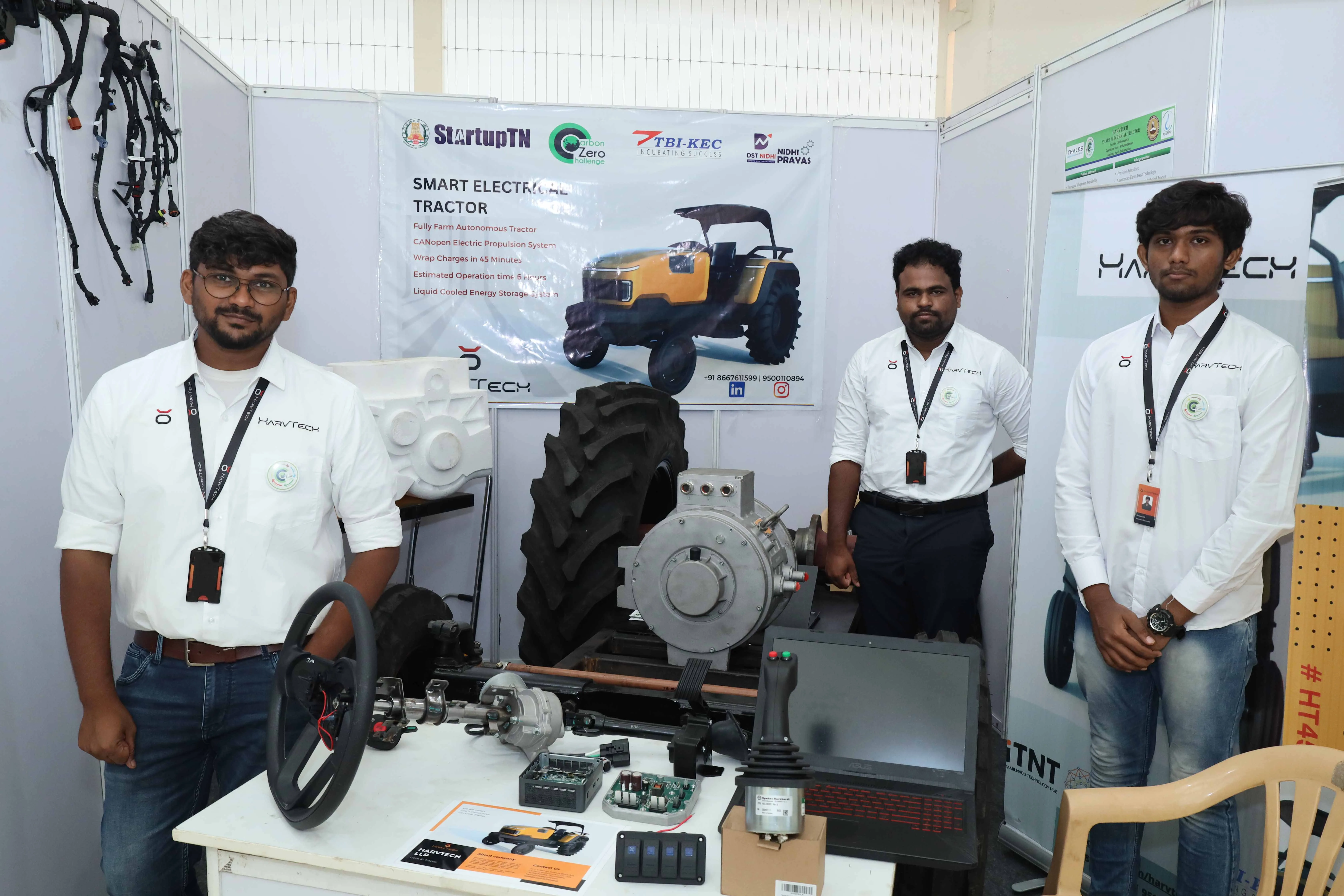
The conclusion to the project was the Grand Expo of the Deep Climate Tech Start-Up Prototypes that took place between 29 and 31 January 2026, with panel discussions, distinguished keynote speakers, a pitch tank for college students and climate games for school students and more. The highlight of the last day of this event was the awards ceremony in which startups that demonstrated outstanding innovation, scalability, and real-world climate impact were recognised with cash prizes.
Carbon Zero Challenge 5.0 has thrown open the doors of technology and entrepreneurship to sustainable development goals, in harnessing climate and environmental intervention as positive business practice, while reinforcing the role that we humans ourselves play in the health of our planet. (450 words)