
The TTK–IIT Madras Collaboration Driving Inclusive Innovation
In India, where access to affordable assistive technologies remains a critical challenge, a powerful collaboration between industry philanthropy and academic excellence is quietly transforming lives. The TTK Center for Rehabilitation Research and Device Development (R2D2) at IIT Madras stands as a compelling example of how Corporate Social Responsibility (CSR) can catalyse deep, scalable social impact.
The CSR Vision: Where Purpose Met Possibility
The origin of R2D2 is rooted in a bold and values-driven CSR decision by the TTK Group, led by visionary industrialist T. T. Jagannathan. At a time when assistive technology was still underdeveloped in India, TTK chose to invest not just in research—but in human dignity, independence, and inclusion.
Rather than seeking short-term outcomes, this CSR initiative focused on building long-term institutional capacity at IIT Madras, enabling cutting-edge research to translate into real-world solutions.
The philosophy was simple yet powerful: if technology can improve lives, it deserves to be built—and made accessible.
This collaboration led to the establishment of R2D2 in 2015—one of India’s first dedicated centres for rehabilitation and assistive device innovation.
Building a Centre of Excellence for Social Impact
Since its inception, R2D2 has evolved into a nationally and globally recognised hub for assistive technology innovation, combining engineering, clinical research, and user-centric design.

Key Impact Metrics
- 10,000+ lives touched through devices, outreach, and awareness
- 40+ multidisciplinary team members
- 11 patents granted and 10+ pending
- 50+ research publications
- 4 products launched, with 9+ in pipeline
These numbers reflect not just academic output, but real-world transformation enabled through CSR-backed research.
From Lab to Life: Affordable Innovation at Scale
A defining strength of the TTK–IITM collaboration is its translational approach—moving innovations from the lab to the lives of users.
R2D2 has developed a suite of impactful assistive devices, including:
- Standing wheelchairs (Arise, NeoStand)
- Active wheelchairs and mobility add-ons (NeoFly, NeoBolt)
- India’s indigenous polycentric prosthetic knee (Kadam)
- Neuro-rehabilitation robots (PLUTO)
These innovations are designed with a clear mandate:
Affordability + Accessibility + Functionality
By partnering with industry players and startups like NeoMotion, these technologies are commercialised and scaled, ensuring CSR investments translate into sustainable solutions.
Beyond Funding: A Deep, Strategic CSR Partnership
What makes the TTK collaboration distinctive is that it goes far beyond financial support.
1. Enabling Risk-Taking Innovation
TTK’s CSR backing provided researchers the freedom to experiment and innovate, without immediate commercial pressure.
2. Building an Ecosystem
The centre collaborates with:
- NGOs like Vidya Sagar and Amar Seva Sangam
- Hospitals such as CMC Vellore and MIOT
- Global academic institutions and rehabilitation experts
This ecosystem ensures that solutions are:
✔ Clinically validated
✔ User-tested
✔ Socially relevant
3. Strengthening India’s Assistive Tech Landscape
R2D2’s work feeds into larger national initiatives like assistive health technology centres and inclusive policy frameworks, amplifying CSR impact at a systemic level.
Human Impact: Technology that Restores Independence
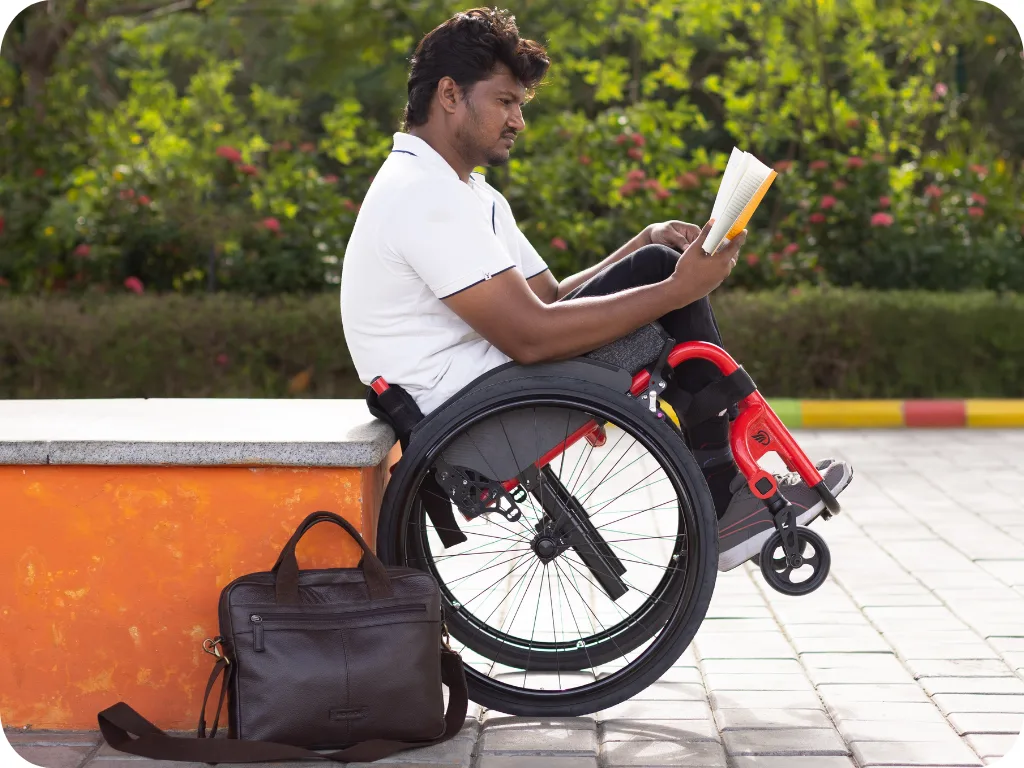
At its core, this CSR initiative is about people, not products.
Every wheelchair, prosthetic, or rehabilitation device developed at R2D2 represents:
- A child going to school independently
- A professional returning to work
- A patient regaining mobility and confidence
The focus on user-first engineering ensures that solutions are not only functional but life-changing.
A Model CSR Collaboration for the Future
The TTK–IIT Madras partnership offers a replicable model for CSR in India:
What sets it apart?
- Institution-building, not one-time funding
- Research-to-impact pipeline
- Strong academia–industry–social sector integration
- Focus on affordability and scale
It demonstrates that CSR, when aligned with deep technical expertise and long-term vision, can move beyond compliance to become a driver of innovation and social transformation.
Conclusion
The TTK Center for Rehabilitation Research and Device Development at IIT Madras is more than a research lab; it is a testament to what purposeful CSR can achieve.
By backing science with compassion and innovation with intent, the TTK–IITM collaboration is not just creating technologies, it is restoring mobility, dignity, and opportunity for thousands.
And in doing so, it sets a powerful precedent:
The future of CSR lies in enabling ecosystems that empower people at scale.