

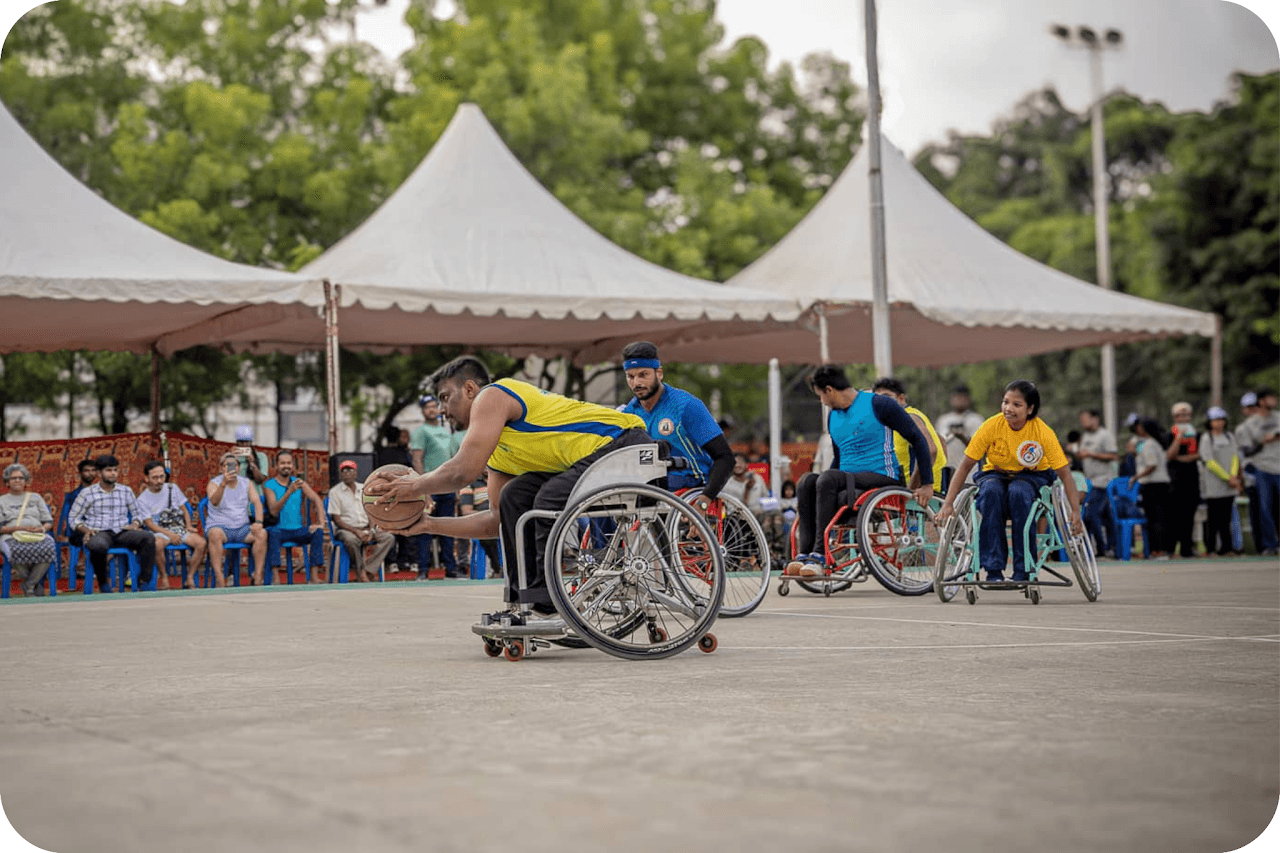
Centre for Para-Sports Technology & human movement analysis
Principal Investigator
Prof. Manish Anand
Objective
- Establish a permanent national para-sports measurement facility, with a calibrated laboratory commissioned and operational, configured for wheelchair and prosthetic users, with documented assessment protocols, Build indigenous sports equipment capability through an operational fabrication workshop and a validated equipment portfolio across six sport categories, designed, tested and deployed, Extend credible assessment beyond the laboratory, with markerless systems validated against laboratory ground truth and deployed in academies, schools, clinics and training grounds, Deliver continuing athlete services, with athletes assessed, fitted and supported across multiple competition cycles and longitudinal profiles maintained, Build the national human resource base, with coaches, physiotherapists, technicians, students and research scholars trained and certified through Centre programmes, Establish Indian para-athlete reference data through an open-access normative database published and maintained as a national resource, Achieve institutional permanence, with the Centre operating with established service arrangements, partnerships and revenue pathways at the close of the funded period
Description
- The Centre will operate as an integrated facility in which measurement, engineering, athlete services and capability development reinforce one another. Athletes are assessed on gold-standard instrumentation. Assessment data drives equipment design and individual fitting. Fitted equipment is validated on the same instrumentation. Coaches are trained to use the resulting data. Measurements accumulate into a national normative database. Each function strengthens the others, which is the argument for housing them together rather than funding them separately.
Impact
- National and state level para-athletes across athletics, wheelchair racing, para-shooting, Boccia, para-swimming and wheelchair badminton receiving assessment, individually fitted equipment and continuing support across competition cycles, Coaches, strength and conditioning professionals, physiotherapists, classifiers and sports science personnel receiving structured certification training, Para-sport academies, schools, regional training centres and state sports bodies gaining access to assessment services and field-deployable measurement, Persons with disabilities receiving rehabilitation support in clinical and community settings, benefiting from accessible movement assessment, Able-bodied athletes and grassroots sport institutions, for whom the same measurement infrastructure and markerless systems are directly applicable, Students, research scholars and technicians trained through Centre fellowships, forming the future technical base for assistive and sports technology in India, A minimum of 30 per cent female participation targeted across athletes served and personnel trained, Capital instrumentation, a trained technical team, accumulated athlete data and formal partnerships remaining available as national capacity well beyond the funded period