
National Center for Assistive Health Technologies (NCAHT)
Principal Investigator
Prof. Sujatha Srinivasan & Manish Anand
Objective
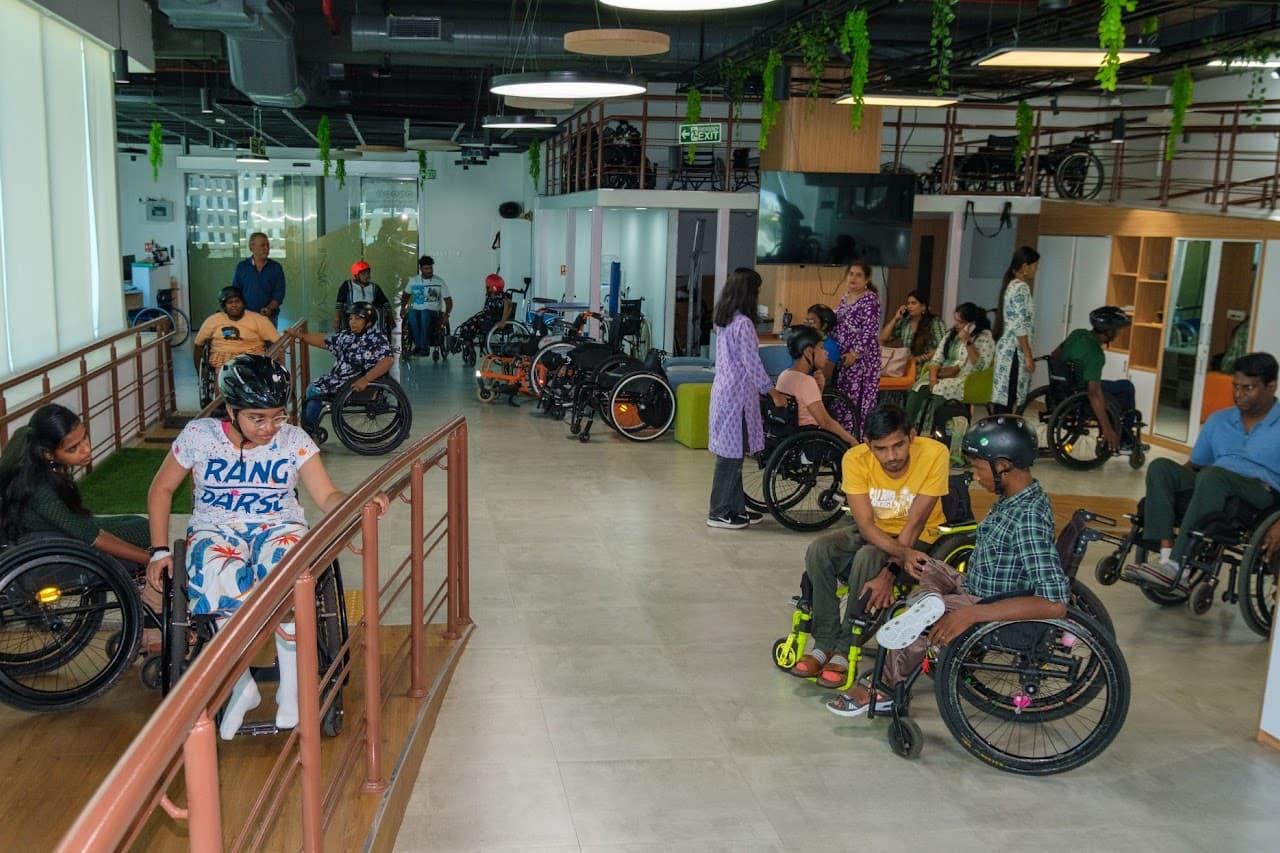
- To build India's permanent institution for assistive technologies, inclusion and dignity, addressing an assistive technology ecosystem that is fractured at every level, To connect the development of high-quality devices with the training, prescription and policy systems that get those devices to the people who need them, Experience and simulation zones with full-scale architectural barriers and VR wheelchair simulation, so that policymakers and architects experience disability through immersion, Wheelchair skills and user training through structured 2-3 week peer-led programs taking users from dependence to independent mobility and community participation, Clinician capacity building in assistive technology prescription, evidence-based device selection and user-centric rehabilitation, Innovation and startup enablement as a living testbed providing user validation, clinical feedback and real-world testing, Sports, arts and culture programs enabling access to adaptive sports and shifting the national conversation from deficit to capability, Policy and systems change as a national reference point for disability-inclusive design, guiding national assistive technology schemes, To establish an endowment corpus preserved in perpetuity funding the centre's core operations, alongside project grants delivering its frontline programs
Description
- NCAHT is a flagship initiative hosted at IIT Madras, conceptualised and executed by the Centre for Rehabilitation Research and Device Development (R2D2). It is not a lab, a showroom or a clinic, but a living, user-facing ecosystem that is part training ground, part innovation testbed, part policy immersion centre and part community space, combining device innovation, user training, clinician education, policy immersion, adaptive sports and cultural inclusion under one roof. It treats persons with disabilities not as beneficiaries but as experts, co-creators and leaders.
Impact
- 800+ wheelchair users trained, with 100% achieving independent mobility based on statistical analysis of pre and post test and performance scores, 2,500+ clinicians upskilled, 50+ policymaker immersion visits hosted, 4+ assistive technology startups supported, and 30+ partner hospitals and centres engaged, Structured training converts hospital-grade wheelchair users into confident, independent individuals who commute, work and participate in community life, Devices developed at IIT Madras in active deployment, including an ultra-lightweight active wheelchair currently used by injured Army and Navy soldiers, A permanent operational backbone funding the core clinical and training team, infrastructure and maintenance, technology refresh, outreach and scale-up, and institutional governance, Positioning as the national implementation partner as the Government of India scales its assistive technology and accessibility programs, Persons with disabilities treated not as beneficiaries but as experts, co-creators and leaders